Sunday, November 21

ASPENDOS


About 45km from Antalya lies one of the most remarkable Roman
theaters in the world (open 8am-7pm in summer; 8:30am-5pm in
winter; entrance fee). Built from heavy grey stone and biscuit-colored
limestone during the reign of Marcus Aurelius (161 to 180 AD), the
theater is almost perfect.

The grand arena has 15,000 seats topped by a row of columned arches
that curve around to touch the stage building. It is unusual for a theater
to be totally enclosed in this way. The stage building was highly
decorative with statues in the niches. Five doors allowed the orchestra
and actors to enter. During gladiatorial combat, the smaller doors
would have been used to let in the wild animals.
The city’s inhabitants enjoyed the plays for free,
which were paid for by high-ranking officials to
win popularity. Theater tickets were usually
made of bone or metal and would sometimes
be in the shape of a bird or a fish.
Romans preferred bawdry entertainment with coarse language and
satire aimed at their Greek predecessors. They used Greek masks to
mock them. Gladiator and wild beast contests were the most popular
forms of entertainment. In addition to the amphitheater, there are the
ruins of an agora, acropolis, nymphaeum and a wonderfully preserved
Roman aqueduct

LARA BEACH


Pass through the elegant arches of Hadrian’s Gate on to Atatürk
Caddesi and turn right for the Atatürk Museum (open 8:30am-5pm,
closed Monday; free). The house, which Atatürk visited between
1930 and 1935, has a collection of evocative photographs and some of
his personal belongings ranging from a gramophone to his pajamas.
Farther along the same road, past rows of shops, restaurants and bars,
is a strip of mass-market hotels. Many overhang the cliffs above Lara
Beach (10 km/six miles to the east of the city center). Just before you
get to the beach are the Lower Düden Falls, which crash down the
rocks into the sea. They are best seen from a boat.

OLYMPOS

Push back thick vines and centuries-old pine trees to uncover shattered
temples, columns and bathhouses strewn along either side of
Ulupinar Stream, which trickles into
the sea. The pathway opens up for a
few meters to reveal tombs and the
remains of a monumental gateway
before the ruins are lost again. A
crumbling bridge lies on the northern
side. Opposite is a church whose
frescoes are now invisible. It is difficult
to get close to some of the ruins
because much of the woodland area
off the scratchy stone passageway is
a swamp.
Olympos dates from the Hellenistic age and became a major force in
the Lycian League. During this time, the bay of Antalya was under
pressure from pirates, who posed a threat to the interests of the Roman
Empire in the Eastern Mediterranean. As most of the pirates lived
in Olympos, the city aroused interest in Rome. Roman commander
Servilius Iscauricus Vulso captured the pirate chief, Zeniketes, in 78
BC, freeing the area of pirates. By this time, the Romans had lost patience
with Olympos for sheltering the pirates and threw it out of the
League.
The peak of development in Olympos came at the beginning of the
third century. The latter part of that century saw a resurgence of pirate
activity with such extensive looting that the city shrank into a village.
Attempts by the knights of Venice, Genoa and Rhodes to revive
it were short-lived. Control of the Mediterranean Sea had already
passed to the Ottomans and Olympos was abandoned in the mid-15th
century.

Thursday, September 30

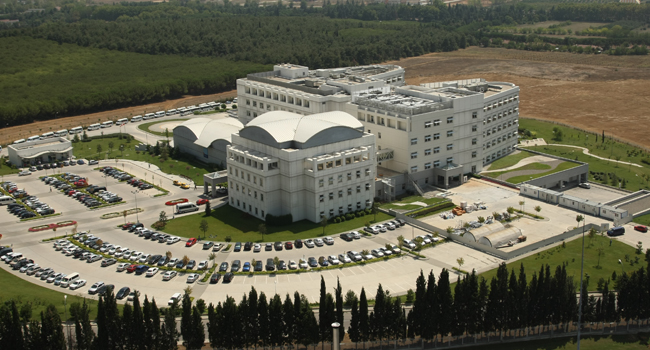
HEALTH IN TURKEY

http://www.medical-trip.com/wp-content/uploads/2008/10/turkey-cyberknife-hospital.jpg

DOCTORS & DENTISTS


English is widely spoken among health-care professionals. Hotels and
embassies can advise on local doctors and dentists. Medical services
can be expensive, though dentistry is usually cheaper than in theWest.

PHARMACIES & MEDICATION

Travelers should ensure they have enough medication to last during
their trip, as well as a copy of the prescription or a letter from your
health-care provider explaining that the medication has been prescribed
for you. All medications should be stored in carry-on baggage,
in their original containers with clear labels.

Pharmacies are generally well stocked and pharmacists are knowledgeable
in advising on the treatment of minor illnesses. Englishspeaking
doctors are easy to find and foreign-run hospitals are available
in larger cities and resorts.

FIRST AID KIT

A first aid kit should include: Band-Aids, adhesive bandages, gauze,
tweezers, scissors, cotton-tipped applicators, antiseptic cream, antiseptic
wipes, heat spray, diarrhea medication, antihistamine, aspirin,
ibuprofen, digital thermometer, cold remedies, insect repellent containing
DEET (Jungle Formula is the best on the market), sunscreen
and aloe gel for sunburns.

Remember, a medical kit is only useful if it is easily available. It should
be carried in a car or in carry-on luggage on excursions. Basic first aid
kits and specialized sports and family medical kits are available from
pharmacies and outdoor stores in the US. These websites sell a range
of medical kits: Adventure Medical Kits, www.adventuremedicalkits.
com; Chinook Medical Gear, www.chinookmed.com; Harris International
Health Care, www.safetravel.com; Travel Medicine, Inc, www.
travmed.com; Wilderness Medicine Outfitters, www.wildernessmed
icine.com.

VACCINATIONS

The World Health Organization recommends vaccines against Hepatitis
A, Malaria and Typhoid for travel to the Middle East region,
which includes Turkey. A booster may be required for tetanus-diphtheria
and measles. Discuss your travel plans with a health-care provider
to determine which vaccines you will need.

HOSPITALS

Major cities and resorts have private hospitals that maintain international
standards.

MONEY MATTERS

http://www.allabouticmeler.com/yeni_Trk_Liras.jpg

CURRENCY

In 2005, the New Turkish Lira (YTL) was introduced to simplify the
currency. Six zeros were deleted from the existing Turkish Lira. From
2006, only the new currency is in circulation and is once again known
as the Turkish Lira. There are 100 Kurusu to a lira.
Turkish Lira is available in 1, 5, 10, 20, 50 and 100 Turkish Lira bank
notes, as well as 1, 5, 10, 25 and 50 Kurusu and 1 Turkish Lira coins.

BANKS, ATMS & EXCHANGE OFFICES

ATMs are widely available. Exchange rates are often better in Turkey
than at home and cash can be exchanged commission-free in many
banks and exchange offices.

Banks are open Monday to Friday 8:30am to noon and 1:30pm to 5pm.
In summer, they sometimes open at 8am and close at 2pm. Hours can
also be shorter during the month of Ramadan.

TRAVELERS’ CHECKS

Travelers’ checks can be exchanged in banks and some post offices.
Foreign currency checks may incur charges of between 10 and 25%.

CREDIT CARDS

Credit cards are accepted in cities and towns. It is a good idea to inform
your credit card company that you will be traveling, as some
stop cards used in Turkey to guard against fraud.